
Reflecting the Tracking
Motivation
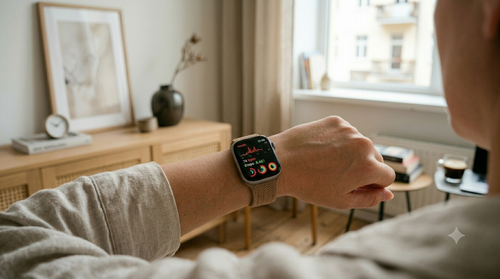
Fitness trackers, smartwatches, sleep trackers, and other digital health devices are now part of daily life for millions of people. They collect data on physical activity, sleep, heart rate, and many other aspects of health. While much is already known about how these devices are used in the short term, little research has been done on the effects of long-term use over several years. What potential does continuous data collection offer? Does it help people live healthier lives or detect health changes early on? And who actually uses such technologies over such a long period of time?
Goal
The project examines how people track their health and activity data over the long term, what motivates them to do so, and how the data is used in everyday life. To this end, we are surveying people who have been continuously tracking their health and activity data for at least two years. In addition, we analyze whether long-term self-tracking contributes to behavioral changes. This helps us gain a better understanding of the role long-term self-tracking plays in health, well-being, and prevention, as well as the potential this data offers for digital health research.
Technologies
For the study, tracking data from devices such as smartwatches, fitness trackers, and smart rings is securely collected and analyzed with the participants’ consent. In addition, online surveys and interviews are conducted to gather information on the participants’ motivations for use, experiences, and attitudes.

Internal Leader

Scientific Director


Anika Bork, Nadine Wagener; Frontiers in Digital Public Health; June / 2026

www.bips-institut.de/home.html
Duration
End: 31.01.2027
